

How To Bleed Brakes

If your brakes need repairs or maintenance, the best course of action is to visit a certified service center like the one at our dealership. We’ll be happy to provide you with expert service if you would like to schedule a brake bleed. However, you can also complete this service at home with the right tools.
Bleeding Your Car’s Brakes Takes Just 5 Steps:
Step 1: Change the brake fluid
Before you can bleed your car’s brakes, you need to change the brake fluid. Brake fluid is crucial for the proper functioning of your braking system, so it’s recommended that you have a factory-trained technician do this approximately every three years. This will ensure that your car’s brake fluid is clean and of good quality.
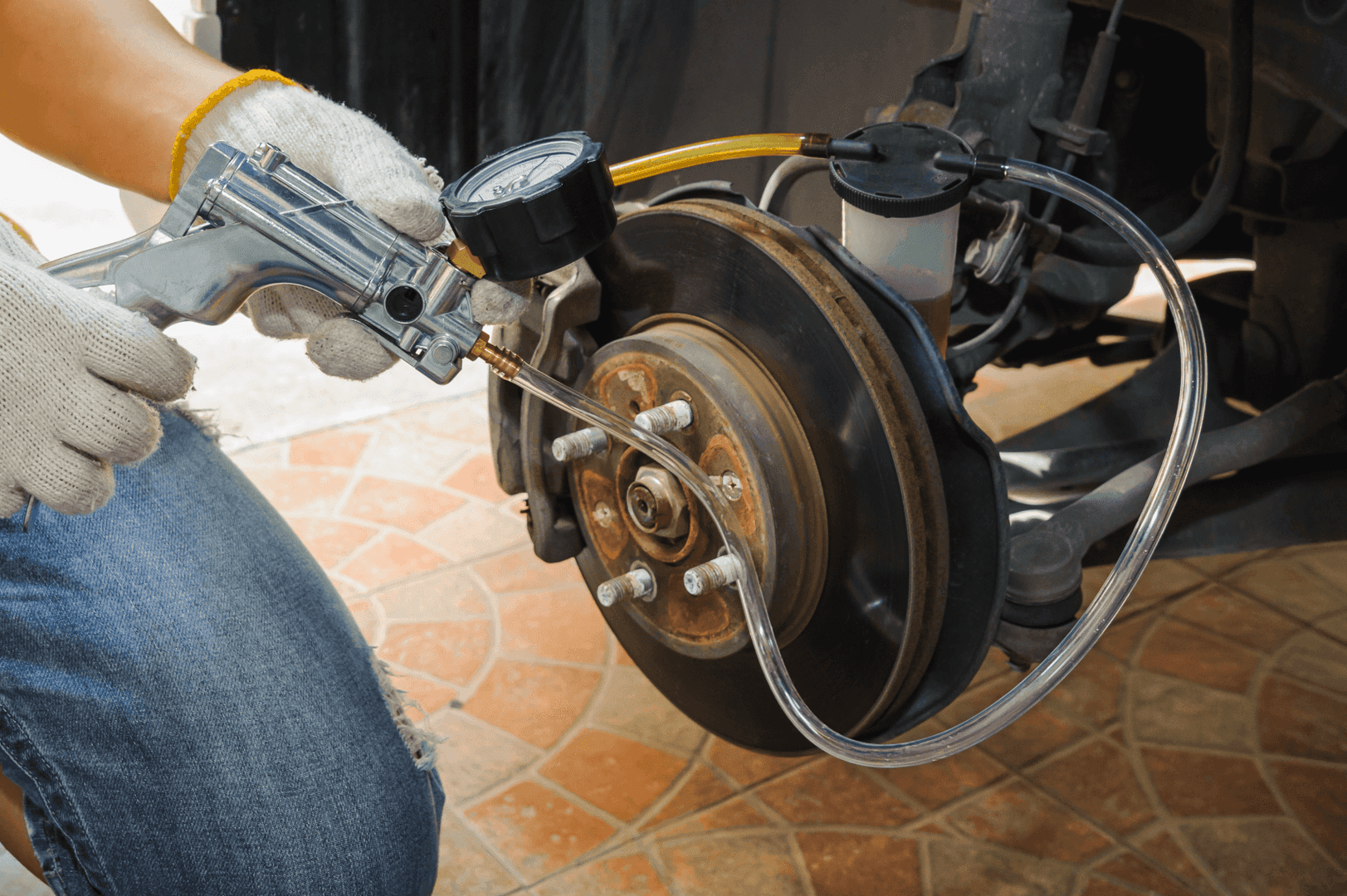 Here’s how to change the brake fluid in your vehicle:
- Turn off the engine and allow it to cool
- Elevate your car and remove the wheels
- Suction old fluid out of the master cylinder reservoir
- Clean out any residue in the reservoir
- Refill the reservoir with the appropriate brake fluid (check your owner’s manual)
- Pump the brake fluid at least 15 times
Now that you’ve changed the brake fluid, you’ll need to remove any remaining old fluid and air from your vehicle’s braking system by bleeding the brakes.
Step 2: Loosen the bleeder valve
You’ll want to loosen the bleeder valve on the wheel that’s furthest away from the driver. In an American car, that’s the rear passenger-side wheel.
Step 3: Attach a clear plastic tube to the bleeder bolt
You can use something like an aquarium tube for this step. Attach it to the open bleeder bolt and put the other end in a clear plastic bottle. Have an inch of clean brake fluid in the bottom of the bottle to prevent air from being sucked back into the brake cylinder
Step 4: Have a partner press down on the brake pedal to drain the fluid
Bleeding your brakes is a 2-person job. Have a second person help you by pressing down the brake pedal as you turn the bleeder bolt to the left and allow the fluid to drain. Once it stops, close the bleeder valve. At this point, your partner can stop pressing on the brake pedal.
Step 5: Repeat until new, clear, bubble-free fluid comes from the bleeder tube
You’ll also want to repeat this for all wheels, moving to the rear driver’s side, then the front passenger’s side. End with the wheel under the driver’s seat. Be sure to constantly refill the master cylinder reservoir throughout the process. Letting it get low may cause more air to enter your brake system and cause you to start the whole process again.
Why You Need To Bleed Your Brakes
 Now that you know how to bleed your car’s brakes, you may be wondering why you need to do it in the first place. Basically, over time, air can get into the brake lines, which can cause your brakes to be less responsive. If this happens, you may experience a spongy feeling in your car’s brakes or longer stopping distances.
Bleeding the brakes can remove this air and keep your brakes working properly. If you notice any of the symptoms of air in your braking system, contact your local service center to discuss whether you need to bleed your car’s brakes.
Our Team Can Bleed Brakes: Make an Appointment Today!
If something feels off about your car’s braking system, you may need to bleed your brakes. Don’t hesitate to have a factory-trained and -certified technician look over your brakes and get them fixed.
Drivers near Eastham, Orleans, and Harwich, Massachusetts, can contact Ira Toyota of Orleans to schedule service today!
